
FERRY SAILING CANCELLED
On April 21, Operational Readiness Exercises are scheduled to take place resulting in the 8:10am ferry sailing from Gabriola being cancelled. The regular schedule is expected to resume with the 8:45 am sailings from Nanaimo Harbour and Descanso Bay.


04/17/2024
Guinness attempt! Lacey is a Gabriola chicken who attempted to get into the Guinness Book of World Records on April 4. Story here. Photo by Jeanette Martin, Shutterjet photography
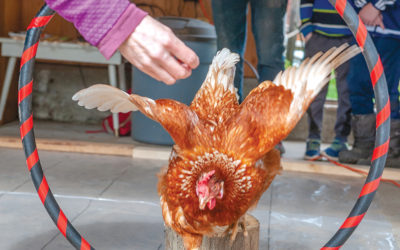
Gabriola chickens attempt to get into Guinness Book of World Records
Derek Kilbourn Sounder News A Gabriola chicken may be going into the Guinness Book of World Records. The record is listed as, “most tricks performed by a chicken in one minute.” Gabriolan Emily Carrington hosted the Guinness adjudicator on April 4. Carrington has...
GVFD soliciting letters of concern from public to Transportation Ministry
Derek Kilbourn Sounder News Gabriola Fire Chief Will Sprogis is calling on members of the public to voice concerns to the Transportation Ministry over the state of the roads on Gabriola. He made the request during his report to the Board of the Gabriola Fire...
Gabriola peace doves about to take flight again
Jonathan Hoskins with one of the third-generation of Peace Doves that he has created as a fundraiser for the Gabriola Museum and Historical Society. Submitted photo Gabriola Museum and Historical Society The third generation of Gabriolan peace doves is being created...
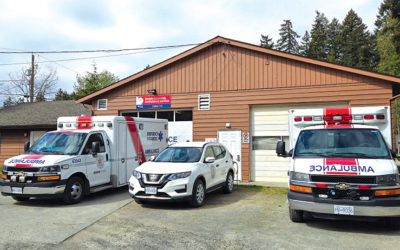
Gabriola ambulance station moved to full-time
Sounder News Ambulance stations in 16 communities on Vancouver Island and the Gulf Islands are moving to what Island Health and the Ministry of Health say are improved paramedic staffing models, to enhance 911 responsiveness and provide consistent and reliable...
Support Your Local News
Letters to the editor
The Gabriola Sounder welcomes letters to the editor for publication. Letters must be signed and a phone number included so the writer’s identity can be verified.
LEARN MORE


Poll
Calendar of Events
M Mon
T Tue
W Wed
T Thu
F Fri
S Sat
S Sun
6 events,

Open Mic Drop In at the Library.
Open Mic Drop In at the Library. All writers are welcome to read their work aloud or just sit and listen. Readings are 5-10 minutes. Last Friday of each month […]
Open Mic Drop In at the Library.
Open Mic Drop In at the Library. All writers are welcome to read their work aloud or just sit and listen. Readings are 5-10 minutes. Last Friday of each month […]
Open Mic Drop In at the Library.
Open Mic Drop In at the Library. All writers are welcome to read their work aloud or just sit and listen. Readings are 5-10 minutes. Last Friday of each month […]
Open Mic Drop In at the Library.
Open Mic Drop In at the Library. All writers are welcome to read their work aloud or just sit and listen. Readings are 5-10 minutes. Last Friday of each month […]
Open Mic Drop In at the Library.
Open Mic Drop In at the Library. All writers are welcome to read their work aloud or just sit and listen. Readings are 5-10 minutes. Last Friday of each month […]
Open Mic Drop In at the Library.
Open Mic Drop In at the Library. All writers are welcome to read their work aloud or just sit and listen. Readings are 5-10 minutes. Last Friday of each month […]
View Calendar
Your Gabriola
Ferry Schedule
Leave Gabriola
5:15am • Mon-Fri only
6:20am •
7:05am Mon-Fri only
7:35am • Except Sun
8:10am
8:45am •
9:20am
9:55am •
10:30am
11:05am •
11:40am
12:55pm •
1:30pm
2:15pm •
2:50pm
3:25pm •
4:00pm
4:35pm •
5:05pm Except Saturdays
5:40pm • Except Wed (DC)
6:50pm •
8:00pm •
9:40pm •
10:30pm • Except Wed
Leave Nanaimo
5:45am • Mon-Fri only
6:55am • Except Sun
7:35am Except Sun
8:10am •
8:45am
9:20am •
9:55am
10:30am • Except Wed (DC)
11:05am
11:40am •
12:55pm
1:30pm •
2:15pm
2:50pm •
3:25pm
4:00pm •
4:35pm Except Saturdays
5:05pm •
6:15pm •
7:30pm •
9:10pm •
10:05pm • Except Wed
11:00pm •

Support Your Local News